 01
01
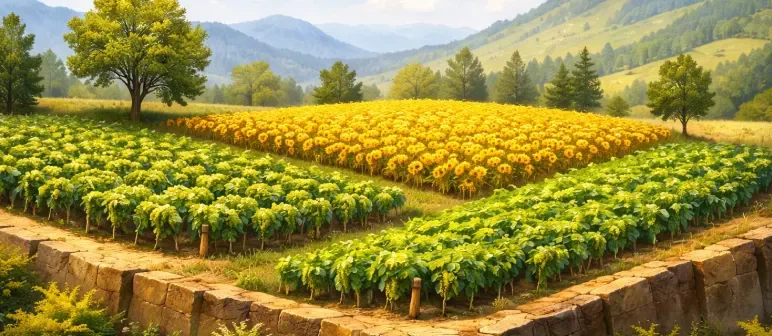
Ground Fields
For stable, consistent crops

Look, I'll be honest — I had no clue what I was getting into with this whole farming thing. I mean, you just toss some seeds around and hope for the best, right? Yeah, turns out I was completely wrong about that. Yeah... that didn't work out so well. My first garden was basically a graveyard for plants.
A patch of soil, a few seeds, open space.
You plant, you wait, you harvest.
Simple.
But then I noticed the ground wasn't as flat as I thought.
Just a little at first — a ridge forming above your field. Then another. And another. Suddenly the land isn't one space anymore.
It's layers.
In Fieldridge Farm, you don't just farm the land.
You learn how it flows.
Because here, what grows above changes everything below.
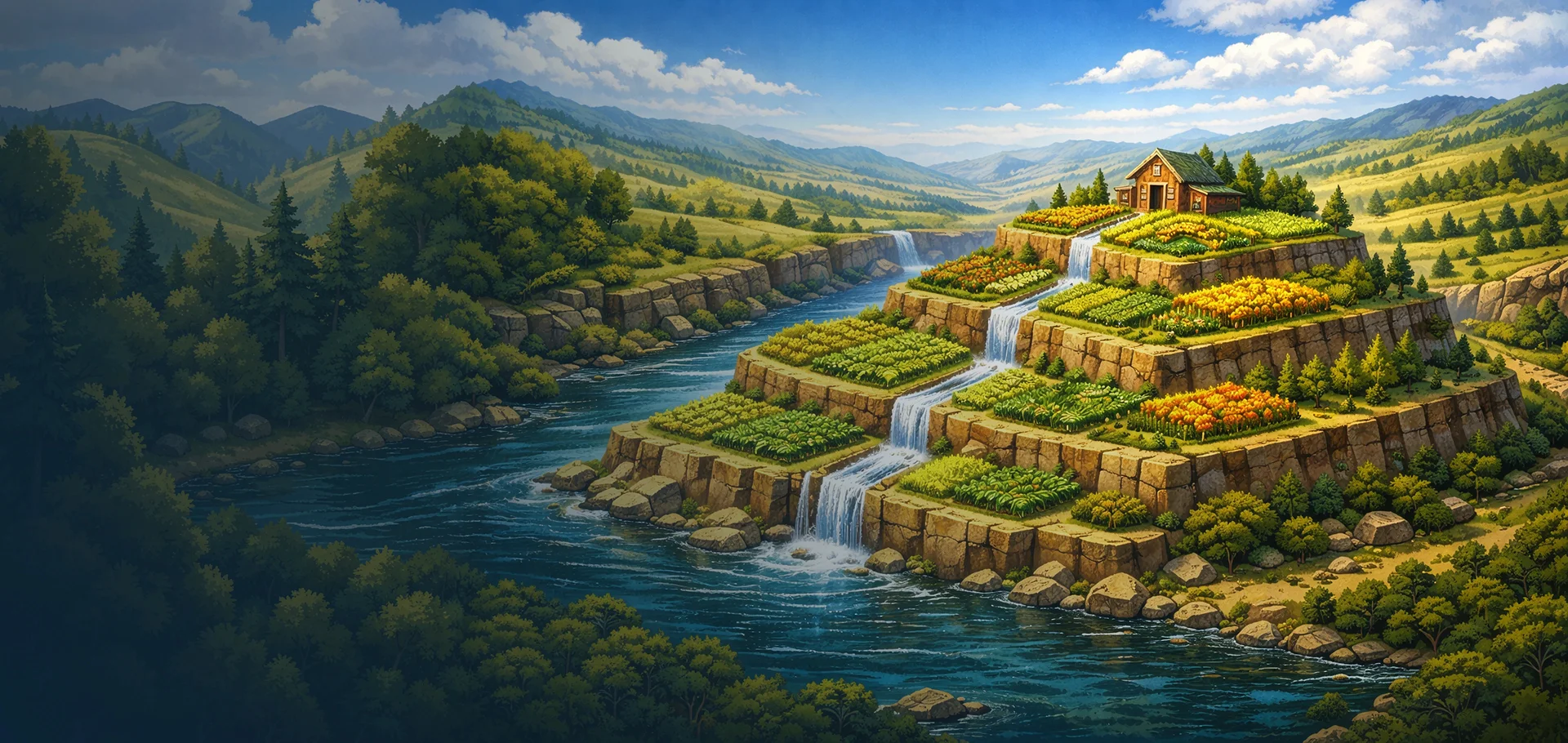

The land builds upward.
Lower fields stay rich and steady.
Higher ridges catch more light but dry faster.
Edges shift depending on how you expand.
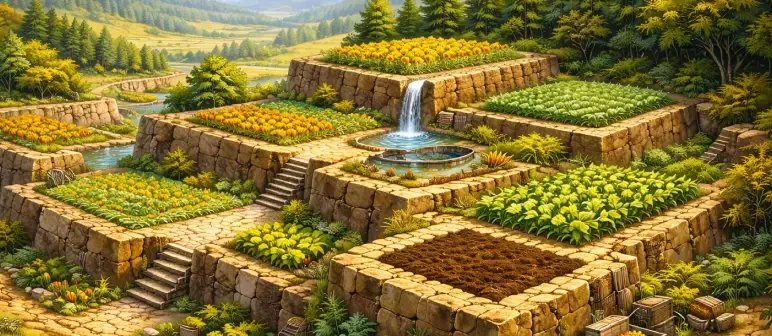
You'll work across different heights:
01
For stable, consistent crops
 02
02
For balanced growth
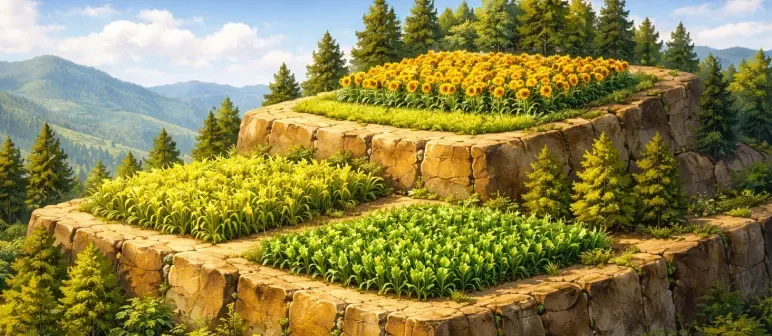 03
03
For rare, high-value plants
Nothing is random.
Where you plant matters as much as what you plant.
At first, you plant what you have.
Then you start noticing patterns.
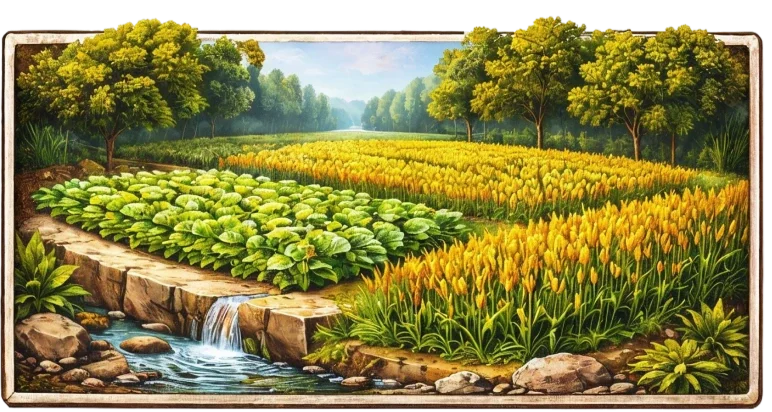
Some crops thrive only in lower soil.
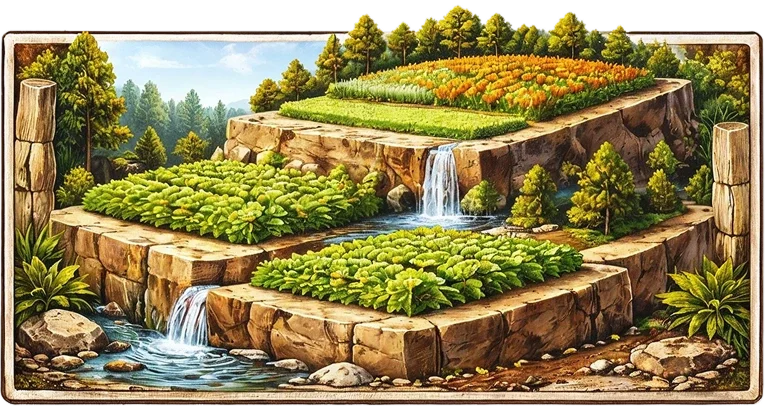
Others need elevation to grow properly.
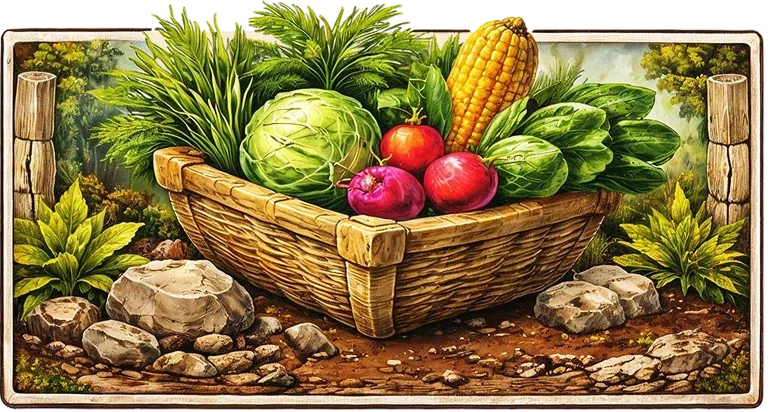
Some respond to water flowing down from above.
You'll experiment, adjust, and learn:
Farming becomes less about planting...
and more about understanding the land.
Water doesn't stay where you place it.
It moves.
So basically, if you mess up at the top of your farm, everything downhill is gonna suffer for it.
You don't just manage crops.
You manage flow.
Before I knew it, my tiny garden patch had somehow evolved into this weird terraced farming setup that probably violates several HOA rules. Pretty sure my neighbors think I've lost it, but whatever.
So I started adding more sections, bit by bit:
There's no one perfect layout.
Only the one that fits your land.
The soil is ready.
The ridges are waiting.
And every level you build changes the next.
Take your time.
Watch how the land responds.
Grow something that works from top to bottom.